


About COREu
The Horizon Europe project COREu will set the path for a successful expansion of CCS technology and brings together over 40 key partners from industry and science.
The project will develop new demonstration projects connecting CO2 sources with potential storage sites.
The development of regional CCUS clusters and their connection to European CO2 transport and storage infrastructure will enable
cross-border cooperation across regions, which is crucial for reaching net-zero GHG emissions by 2050.
Impact

COREu will contribute to 6.8 Mt/yr in CO2 reduction by 2035 and 36 Mt/yr by 2050 in order to support the net zero emission goal.
COREu will develop 8 innovations for measurement, monitoring and verification (MMV), interoperability and value chain monitoring.
COREu will improve the internal rate of return of CO2 infrastructure investment by 6% through de-risking core technologies.
Objectives
COREu aims to establish an openly accessible, cross-border infrastructure and logistics network for CCS, connecting emitters and storage sites across Europe. Its objectives include:

Accelerate CCS deployment by demonstrating safe and effective CO2 transport and storage.
Increase the TRL of the CCS technologies developed.
Achieving a more efficient, clean, sustainable, secure, and competitive energy supply through new solutions for smart grids and energy systems based on more performant renewable energy solutions.
Develop improved CO2 stream specifications for the demo, facilitating open-access transport, by targeted analysis and experiments.
Provide experimental data, new methods and tools for safe design and risk assessment of CO2 transport.
Provide experimental data and develop tools to de-risk and optimize CO2 storage.
Support the deployment of multimodal, open-access CO2 transport by experimental data, validated models and engineering design.
Facilitate the safe operations of, and enable revenues and credits allocation in, CO2 transportation networks by by advancing metering and analysis technologies.
Develop a standard methodology for strengthening social acceptance of CCS technologies.
Monitor, prevent and reduce the environmental impact of transport and storage deployment.
Contribute to create a positive momentum for CCS across E, by mobilizing impacting stakeholders (beyond consortium) & offering an innovative setting for collaborative engagement, resulting in accelerated deployment of safe, sustainable and resilient CCS routes in Europe.
Latest News
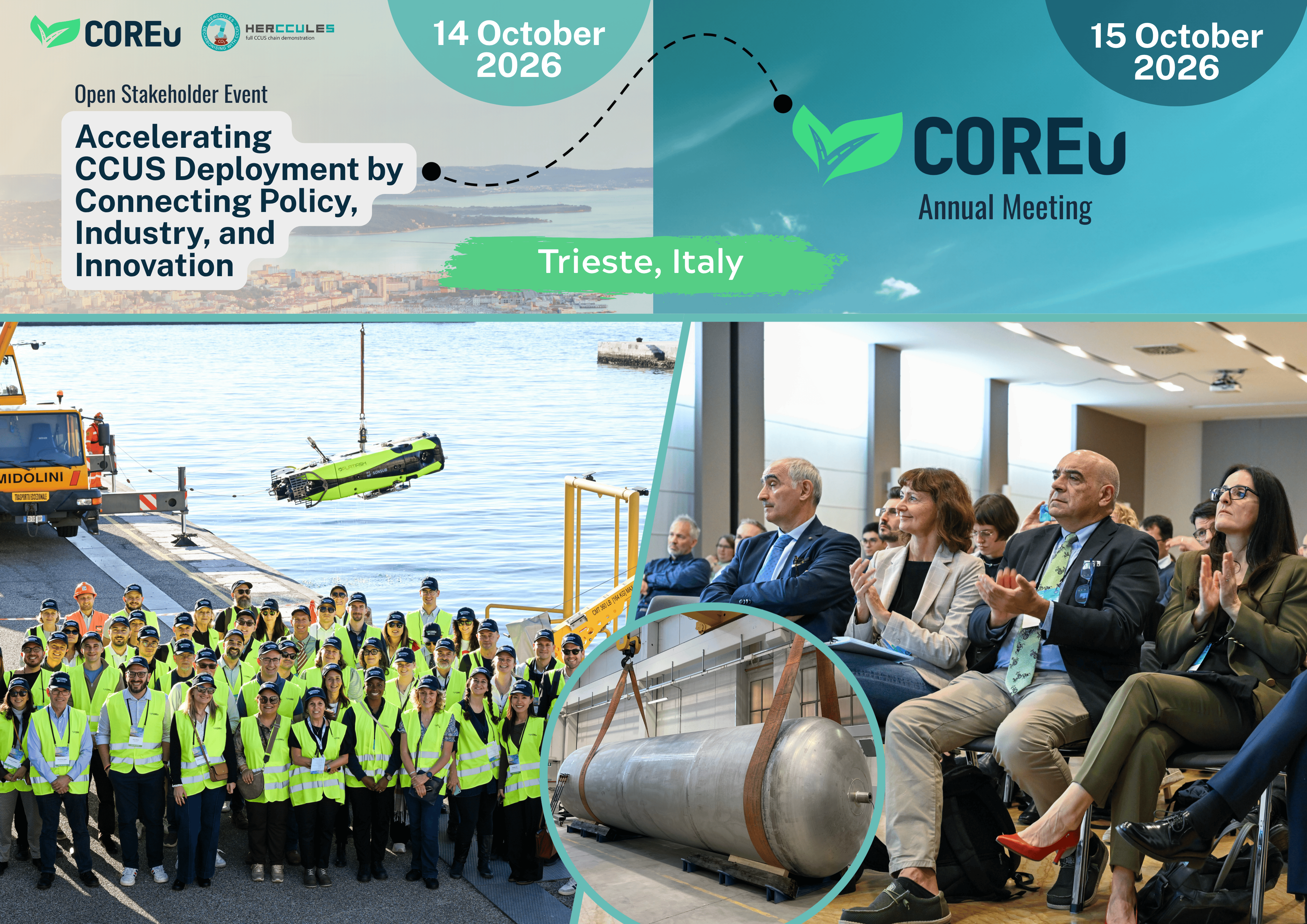
COREu in Trieste: Collaboration, Innovation and Looking Ahead
On 14 and 15 October 2026, the COREu consortium gathered in Trieste, Italy, for its Annual Meeting, bringing together project partners, stakeholders, policymakers, researchers, and industry representatives for two days of exchange, collaboration, and innovation.
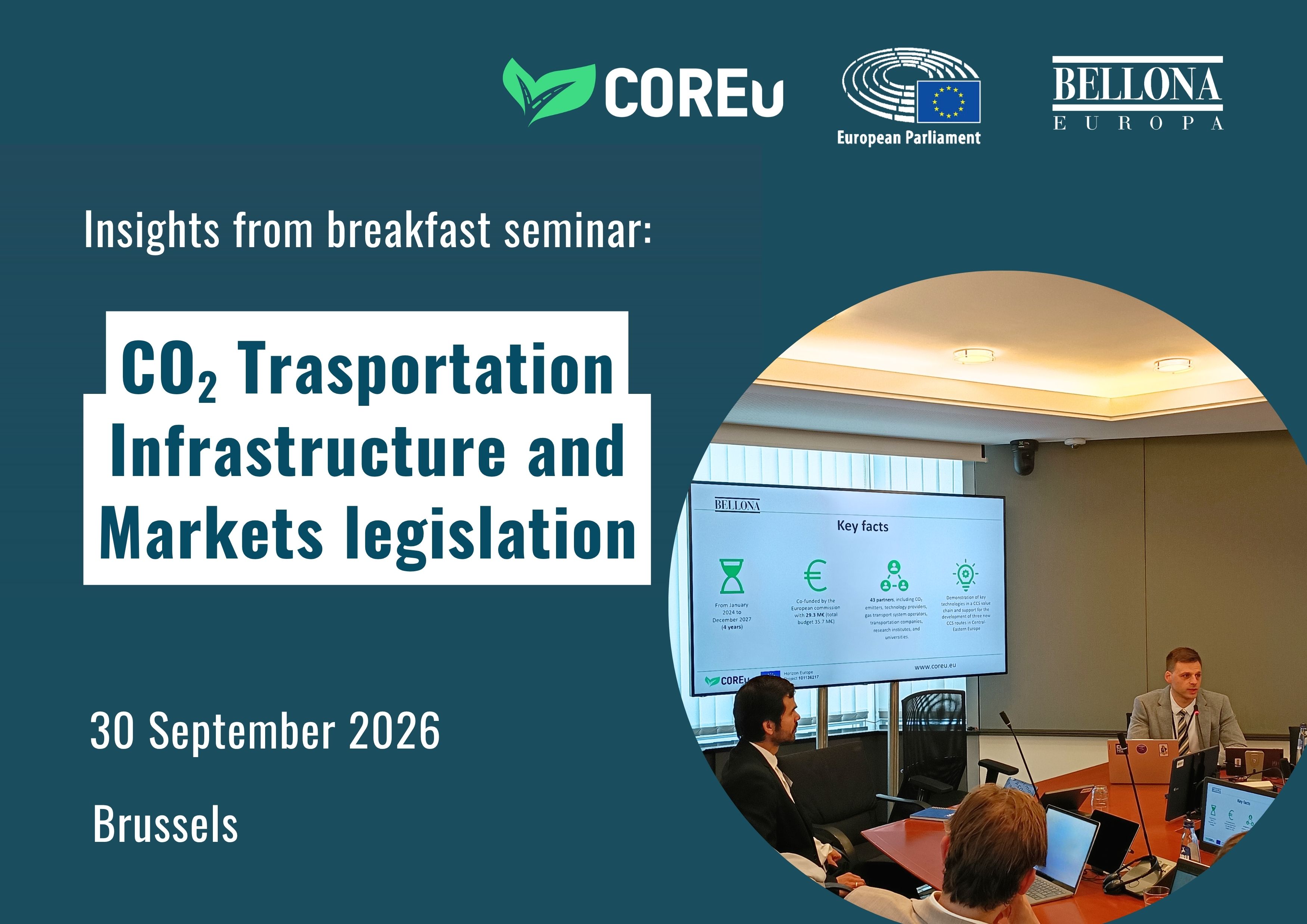
Preparing Europe for Large-Scale CCS: Policymakers and Industry Discuss the Path Forward
On 30 September 2026, our project partner, Bellona Europa, hosted a breakfast seminar for MEPs at the European Parliament, in cooperation with MEP Niels Flemming Hansen. The focus of the seminar was to discuss the role of Carbon Capture and Storage (CCS) in Europe's industrial decarbonisation and the upcoming CO₂ Transportation Infrastructure and Markets legislative initiative.
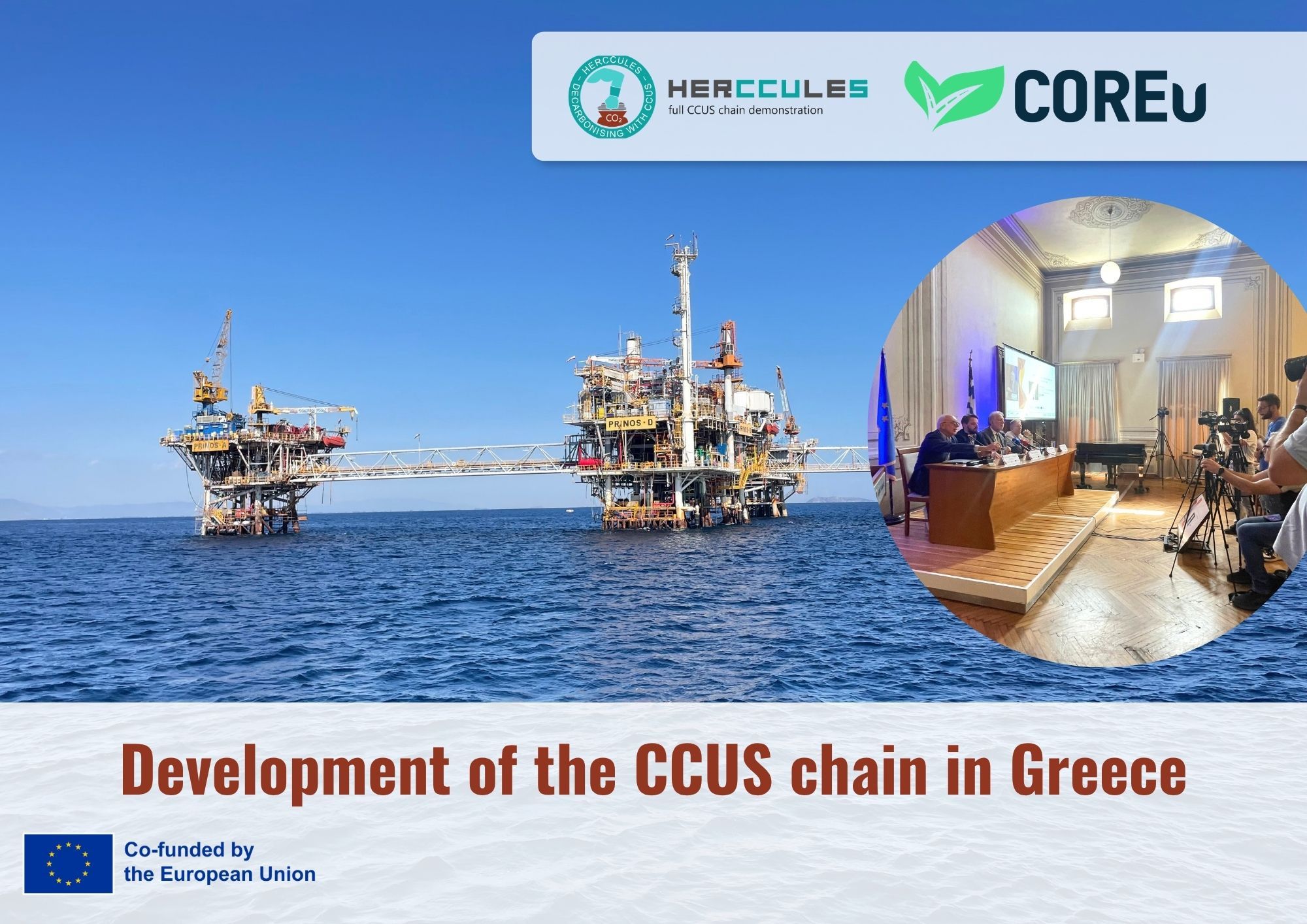
Insights from "Development of the CCUS Chain in Greece" in Kavala
On 17 September 2026, the COREu and HERCCULES project joined forces in Kavala, Greece, for the dissemination event “Development of the CCUS Chain in Greece”, hosted by the Centre for Renewable Energy Sources and Saving (CRES) with the support of Energean, EU CORE Consulting, Steinbeis Europa Zentrum, and LEAP s.c.a r.l..
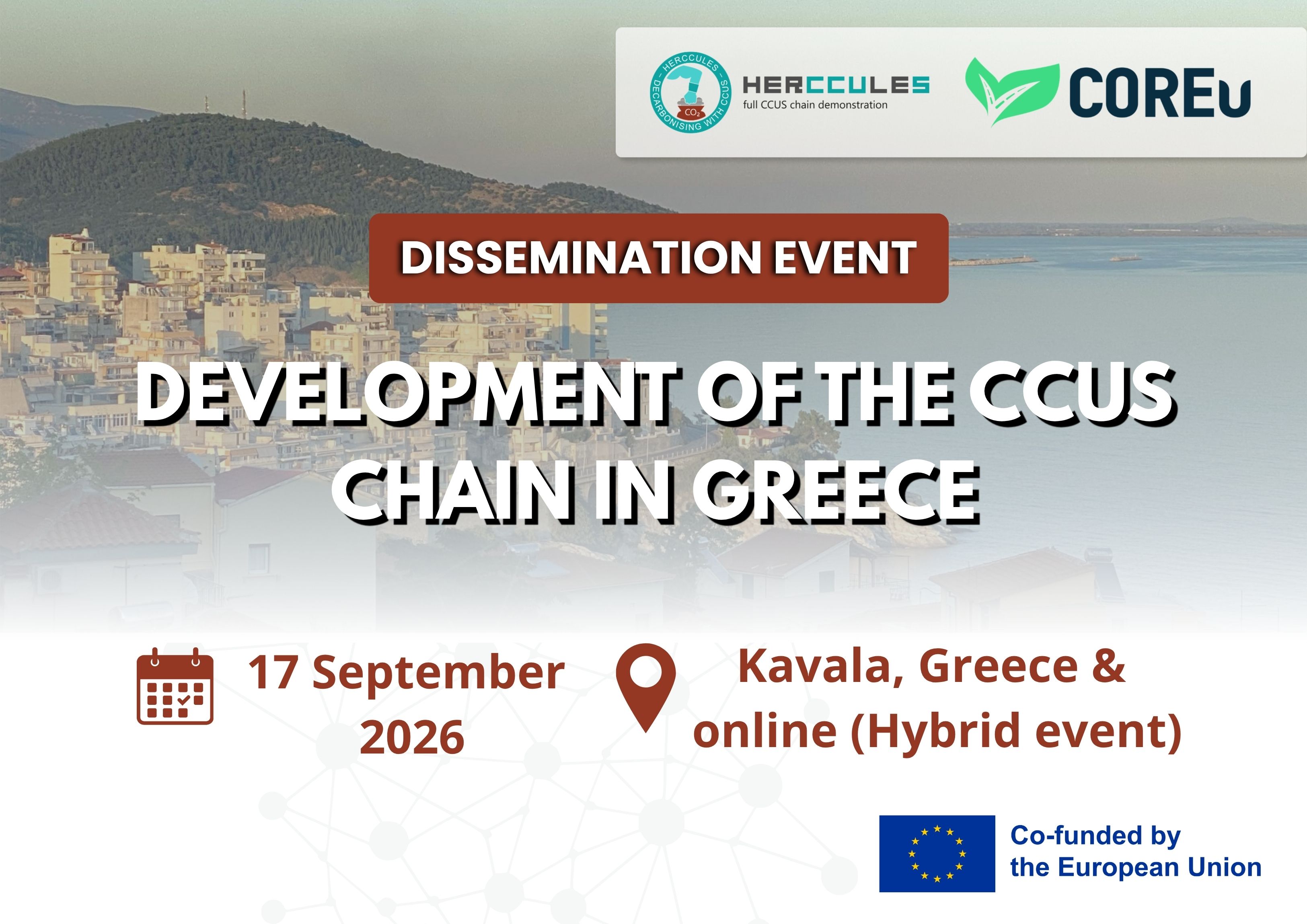
COREu x HERCCULES: Development of the CCUS chain in Greece
Join HERCCULES project and COREu EU Project for the dissemination event “Development of the CCUS Chain in Greece”, taking place on 17 September 2026 in Kavala, Greece with the possibility of joining online.

🎨 ''Bring CoCo to Life'' Colouring Competition by COREu
Welcome to 'Bring CoCo to Life' Colouring Competition! The competition is organised by COREu, a Horizon Europe-funded project exploring innovative solutions for a more sustainable future. Bring CoCo to life with your creativity and colourful imagination. Submit your completed colouring page for a chance to become one of our three winners!
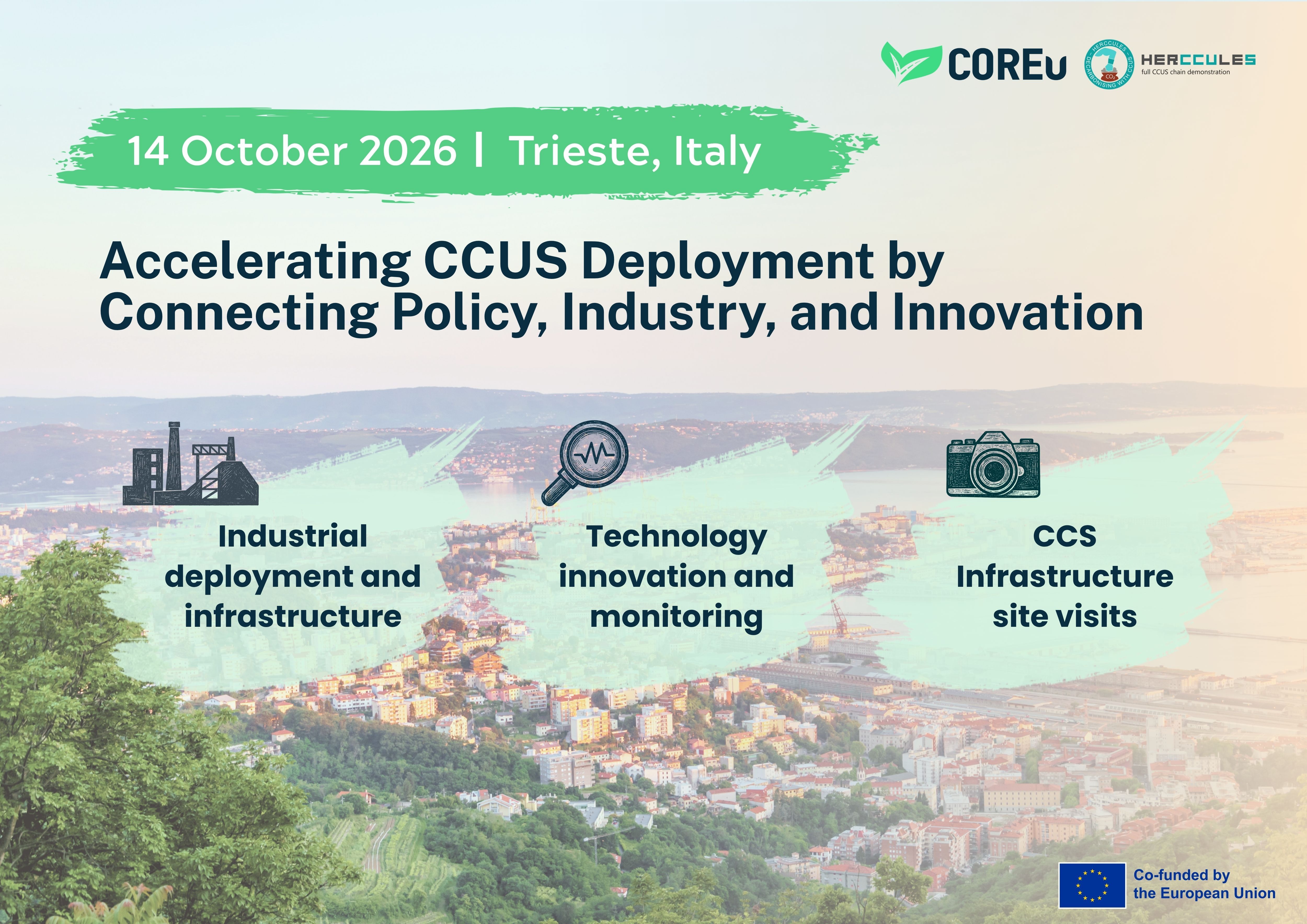
Accelerating CCUS Deployment by Connecting Policy, Industry, and Innovation
A warm invitation to our dissemination event on 14 October in Trieste, Italy. The event will bring together representatives from the entire CCUS value chain, ranging from industry to political stakeholders.
Follow the project
Follow us on LinkedIn